Project Start Year: 2026
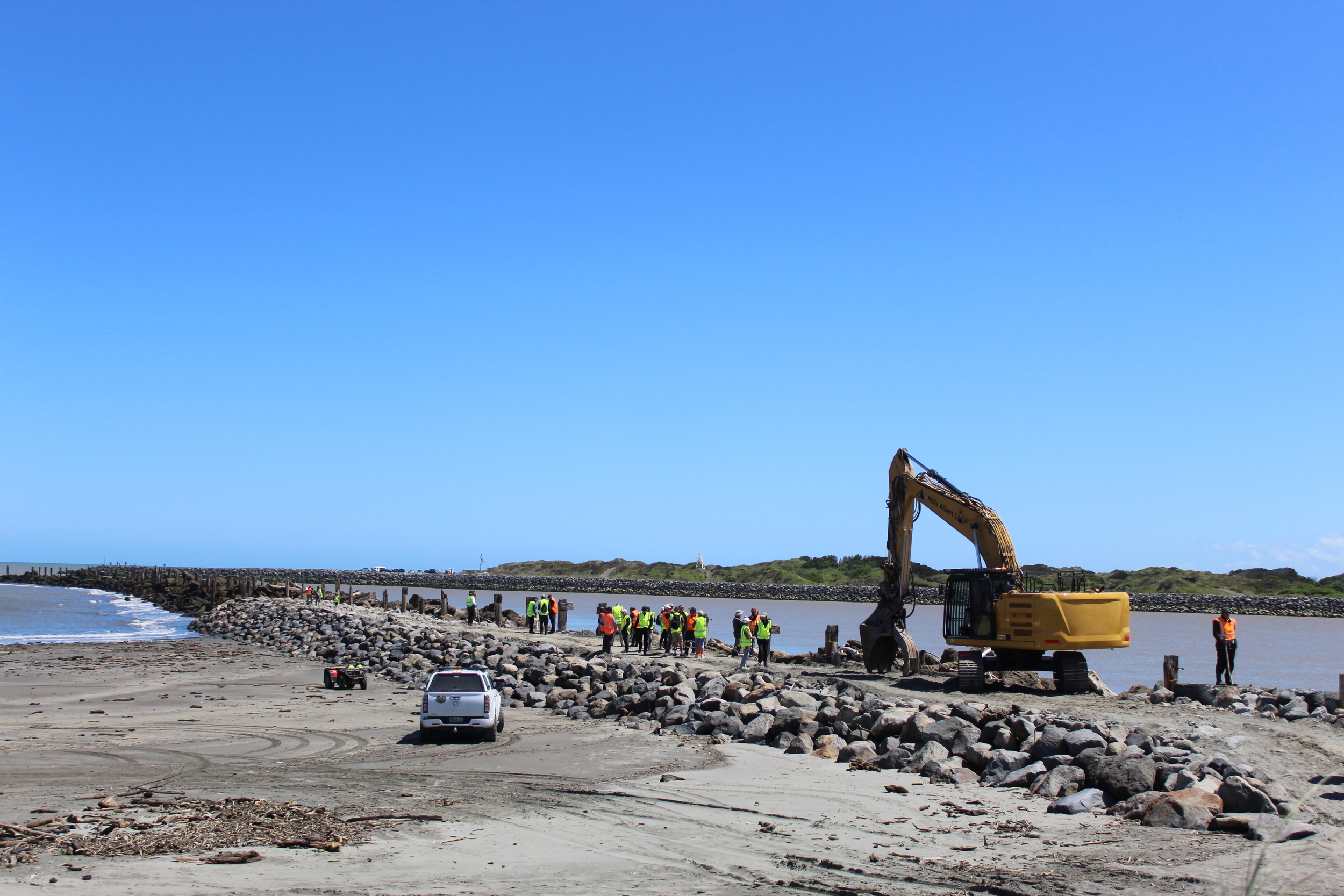
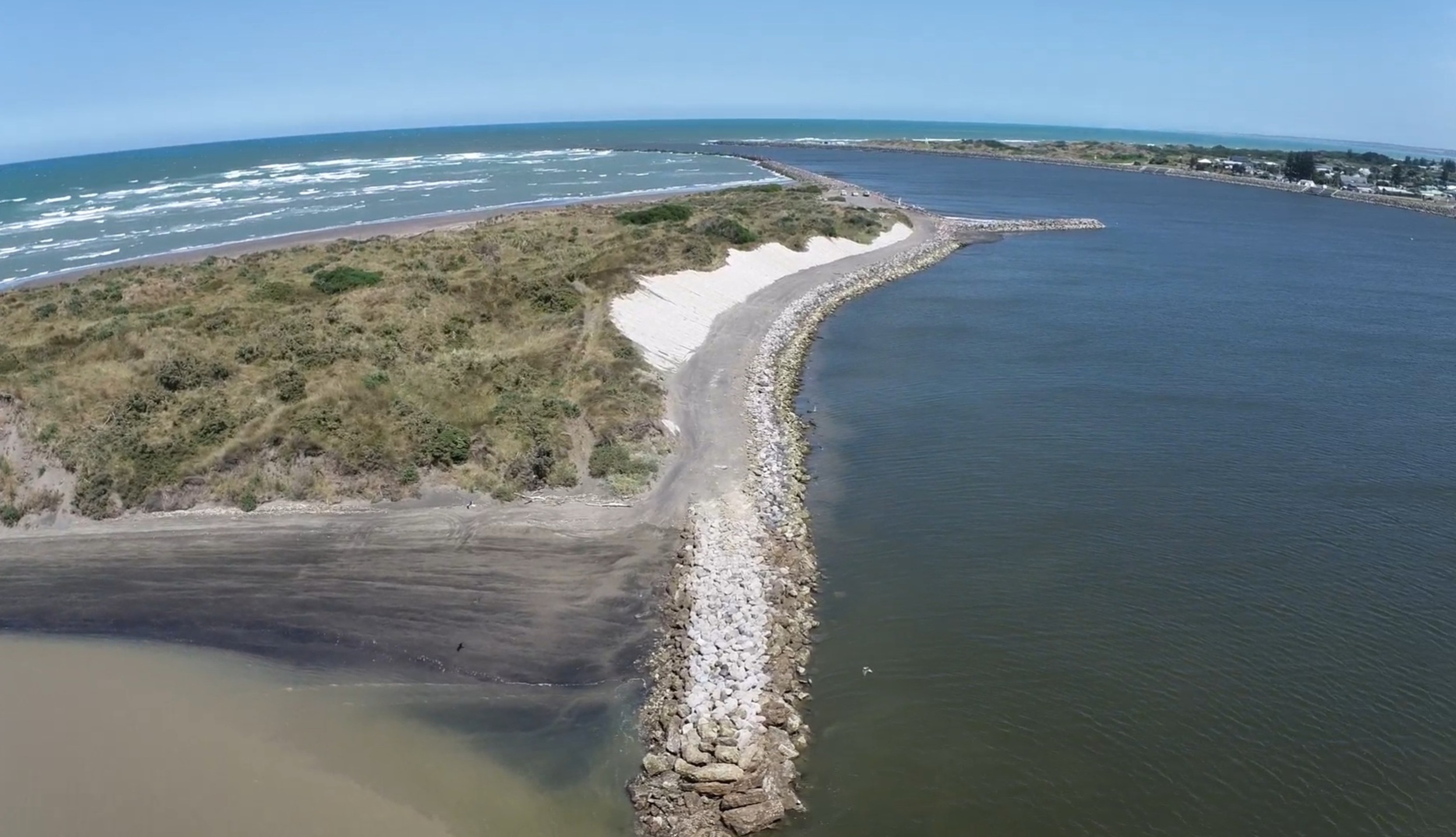
The Lower Whanganui River Flood Resilience Strengthening is part of the wider Te Pūwaha: Whanganui Port revitalisation project. The project involves upgrading stopbank infrastructure to increase protection for Whanganui Port and surrounding areas. The work extends from the South Spit to the end of the South Mole at the mouth of the Whanganui River, and includes reinforcing the existing rock wall and timber groynes, as well as restoring the South Mole to its full length at a height of 2.3 metres. Following construction, around 7,500 square metres of sand dunes will be restored through the planting of native species.
Together, these works are designed to better manage flood risk, protect important infrastructure, and support the long-term stability of the river channel, while also restoring the natural dune environment. By combining engineered solutions with ecological restoration, the project will help create a more resilient and sustainable river mouth for both the community and the surrounding area.
Benefits
These structures help to break up strong waves, protecting key infrastructure such as the Whanganui Port on the northern side of the awa. They are also designed to help hold sand in place to prevent erosion of the South Spit and support a deeper, more stable river channel for vessels. Coastal planting is integral to the design, helping to rebuild strong, healthy dunes that can better withstand wind, waves and flooding.
Overall, the project is intended to improve flood resilience, protect important community assets, and enhance the natural environment at the river mouth. It also supports safer navigation and strengthens the long-term health and stability of the awa and surrounding coastline.
Adaptation
This project is designed to respond to the increasing impacts of climate change, including rising sea levels, stronger storm events and changing river dynamics. By strengthening key structures and restoring natural dune systems, it helps the area better adapt to these pressures over time. It also takes a long-term approach, ensuring the river mouth and surrounding environment remain resilient as conditions continue to change.
Resilience
The project contributes to resilience by protecting the South Spit and structures on the northern side of the awa, helping to safeguard important community assets. By strengthening river control structures and restoring natural dune systems, it reduces the risk of erosion and flood damage over time. Together, these measures support a more resilient environment and provide greater certainty for the community and port operations into the future.
Collaboration
Te Pūwaha is grounded in Tupua te Kawa, which emphasises collective responsibility and working together for the health and wellbeing of the awa. The project is delivered in partnership with hapū and iwi through Te Mata Pūau, alongside Horizons Regional Council and other partners, bringing together local knowledge, expertise and shared decision-making. It is also supported through co-funding from the Regional Investment Fund (Kānoa) and Horizons Regional Council, enabling a coordinated approach to both infrastructure and environmental restoration.
As an integral part of Te Pūwaha, the Lower Whanganui River Flood Resilience Strengthening is not just about building infrastructure, it’s about restoring the health of the awa and surrounding environment. It reflects a long-term commitment to leaving the area stronger, more resilient, and better for future generations.